
Tag Archive for: Ride-Hailing

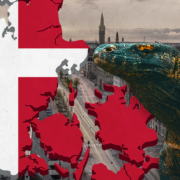
The Komodo Dragon, the Buffalo, & the €200B Ride-Hailing Feast

I was watching a documentary on National Geographic…

A massive buffalo stands its ground: strong, dominant. Then out of nowhere, a komodo dragon approaches, bites once, and backs off.

That’s all it needs.

The wound festers. The buffalo’s blood thins. Within days it weakens, stumbles, and collapses. Then the dragon returns – with others – to devour it. Piece by piece.

The narrator delivers the final line with chilling certainty:
“Everything is eaten. Don’t expect any leftovers from this gruesome feast”

Now, let’s talk about ride-hailing.

The Komodo Dragon is Uber. Or Bolt. And it’s Already Bitten

They’ve acquired your software provider.
They penetrated your market
They’ve onboarded your drivers.
They’ve studied your pricing.
They’ve outspent you in rider demand.
And now?

They’re waiting.

Waiting for your outdated system, cost-heavy growth model, and manual operations to do the rest of the job for them.

They’re patient. Funded. Efficient.
And they know they don’t need to fight hard. They just need to wait for your dispatch system to collapse under its own weight.

Regulation May Thicken the Blood, but it Won’t Stop the Feast

We’ve seen local legacy PHV and taxi operators delay Bolt and block Uber. Protect licenses. All good moves – if they buy you time to modernise.

But too many take that time and use it to… do nothing.

Meanwhile, the market shifts. Riders churn. Drivers drift. Internal ops drag. And the predators move in.

We’ve talked to operators who grew 5-10% last year. They were proud of it, until they realised Uber was growing 30% in the same market, quietly gaining driver loyalty and market share.

It’s not about whether you’re growing.
It’s about whether you’re being outgrown.

Drivers Don’t Pledge Allegiance – They Optimise

Bolt’s 2024 Ride-Hailing Economy Report couldn’t be clearer: earnings per hour is the #1 driver motivator.

Drivers don’t stick with platforms out of loyalty. They log in where they’re most likely to earn more – now. Over 80% of drivers in France and Portugal use multiple apps. Most drive less than 20 hours a week.

Lyft’s 2024 Economic Impact Report tells the same story across the Atlantic:

  • 88% of Lyft drivers clock fewer than 20 hours a week
  • 72% work across multiple apps
  • And the median driver only drivers 145 hours a year – less than 4 weeks of a traditional job.

You’re not just competing for drivers anymore.
You’re competing for fractions of their time.

We’ve seen operators cut commissions from 20% to 10% just to retain supply. It rarely works.

Why? Because 90% of 0.5 rides/hour is still worse than 80% of 1.4 rides/hour.

If you can’t drive demand, no commission cut will solve it.

If those same operators had the right segmentation tools, incentive mechanics, and rider-side promotions, they could have kept commission stable – and used the extra margin to boost volume.

Still Paying Per Driver? That Model Belongs to Another Era

Many operators are still paying software providers per driver or vehicle.

That pricing model may have worked a decade ago, when drivers were full-time, loyal, and platform-exclusive. But that’s not today’s reality.

Now, if you’re lucky, you get 30% of a driver’s available time.

Which means, just to guarantee coverage, you’re often buying 2 or 3 licenses to replace what used to be covered by one.

And here’s the trap:

Every time you try to improve your service – by scaling supply to reduce ETAs, increase availability, or optimise zone coverage – your software cost balloons.

Uber doesn’t pay more when it adds drivers. Their unit costs improve.

You pay more, and your unit economics fall apart.

You’re being penalised for growing the very thing that keeps you in the game.

That’s not just outdated, it’s unsustainable.

You can’t compete for driver hours, rider experience, or operational efficiency when your platform charges you more for trying to improve.

The market has moved on.

If your software pricing model hasn’t, you’re stuck in a game you can’t win.

The Cracks Before the Collapse

We see this every week:

  • Ops teams managing driver logic via spreadsheets
  • Promo campaigns being triggered manually
  • Feature requests stuck in vendor backlogs, mainly software houses with other multiple products
  • Cloud and maps costs rising without visibility
  • No real-time tracking of per-ride unit economics

It’s not a dramatic failure. It’s a slow, quiet erosion.

One workaround. One late update. One more thing you can’t control.

And the Komodo keeps watching.

The Operators Still Standing Are Doing Three Things Right:

  1. They own their pricing, segmentation, and marketplace logic
  2. They scale supply without per-driver cost penalties
  3. They track per-ride unit economics, and adapt fast

They’re not just running fleets. They’re running a ride-hailing marketplace.

That mindset shift is the only thing that gives them a shot.

The European Shared Mobility Market Will Be Worth €200 Billion by 2030 – but Not Everyone Will Eat

Uber and Bolt are circling a €200 billion feast.

And they’ve already bitten into most local operators.
They’ve done the hard part. Now, they wait.

Wait for the outdated pricing models to break.
Wait for legacy software vendors to stall your growth.
Wait for spreadsheet chaos to turn into operational debt.

Because they’re funded, focused, and agile.
And like that Komodo dragon on Nat Geo – they know how this ends.

The buffalo doesn’t die in the moment.
It dies slowly. Bleeding. Stumbling.
While the predators wait for the right time to clean the bones.

“Everything is eaten. Don’t expect any leftovers from this gruesome feast”


By Marvin Briffa, eCabs Technologies’ Head of Product & Operations

The Urban Mobility Gold Rush

In the race for urban mobility dominance, local players and tech giants alike are staking their claim. Who will strike digital gold?


In the bustling cityscape of 2025, a modern-day gold rush is underway. But instead of pickaxes and pans, the tools of choice are smartphones and algorithms. From seasoned taxi operators to nimble startups, everyone’s racing to stake their claim in the app-driven mobility market. The price? A share of the global ride-hailing market projected to reach €200 billion by 2030

The New Urban Frontier 

The urban transportation landscape of 2025 is a far cry from the simple point A to point B journeys of yesteryear. Today’s commuters demand convenience, sustainability, and seamless user experiences. Ride-hailing apps have set new standards, offering features like real-time tracking, cashless payments, and dynamic pricing that have left traditional operators scrambling to keep up. 

As cities grapple with congestion and emissions, app-based services have become the new sheriffs in town, integral to modern urban planning. This shift has created a gold rush mentality, with smaller players seeing an opportunity to strike it rich by launching their own tailored apps. 

Competing with the Giants 

The urban mobility landscape is dominated by tech giants like Uber, Bolt, and Lyft. These behemoths have set the standard for ride-hailing services, but their global approach often leads to frustration for local players looking to compete. New market entrants are no longer satisfied with basic dispatch solutions; instead, they seek a more comprehensive product with advanced features that give them a fighting chance. They are looking for full-fledged ride-hailing apps that can rival the features and user experience offered by the industry leaders. 

This growing demand for powerful, feature-rich ride-hailing solutions is exactly where eCabs Technologies stands out. Unlike generalist tech companies, eCabs Tech has focused solely on building a state-of-the-art ride-hailing platform. By leveraging the combined expertise of our tech team and expansion specialists, we have created a solution that allows local operators to compete on an equal footing with global giants. 

Why Everyone’s Joining the App Rush 

  1. Staking Their Claim: Traditional taxi operators are tired of playing second fiddle to global platforms. By launching their own apps, they can plant their flag, set fair prices, and build their brand identity. 
  2. Local Knowledge is King: Unlike global giants, local operators understand their community’s unique needs and can offer tailored services that address specific regional concerns. For example, eCabs Malta introduced the “Woman+” category, allowing female passengers to select female drivers, enhancing safety and comfort for women riders, and the “Malti+” category specifically for Maltese-speaking drivers and passengers. 
  3. The Mother Lode: With the ride-hailing market set to hit €200 billion by 2030, even a small claim can yield a fortune. 
  4. Government Backing: Some regions are offering tax breaks or exclusive access to certain areas for homegrown solutions, akin to land grants in the old gold rush days. 
  5. Tools of the Trade: Developing an app is no longer like panning for gold with bare hands. White-label solutions and app development platforms have made it easier than ever for businesses to launch their own branded apps. 

Striking Digital Gold Isn’t Easy 

While the potential rewards are glittering, launching an app comes with its own set of challenges: 

  • Technical Expertise: Building a robust, user-friendly app requires specialised skills. 
  • Market Competition: The field is crowded, and standing out requires a clear value proposition. 
  • Operational Complexity: Managing a digital platform is akin to running a complex mining operation. 
  • Customer Acquisition: Attracting users in a saturated market demands smart prospecting strategies. 

This is where companies like eCabs Technologies come in, offering the modern-day mining equipment and expertise needed to succeed. 

eCabs Technologies: Your Partner in the Digital Gold Rush 

In this new frontier, eCabs Technologies emerges as a crucial ally, providing not just the tools but also the expertise to navigate the complex terrain of app-driven mobility. Our offering goes beyond mere app development, encompassing a comprehensive suite of services designed to help businesses strike gold in the digital mobility landscape. 

What sets eCabs Technologies apart is our Growth & Expansion department acting as experienced prospectors guiding businesses through every step of their journey: 

  • Strategic Planning: Developing competitive strategies to help businesses stand out in the market and compete effectively with industry leaders. 
  • Operational Guidance: Providing insights on fleet management, driver onboarding, and operational efficiency. 
  • Marketing Expertise: Crafting strategies to attract users and build brand loyalty in a competitive market. 
  • Continuous Improvement: Offering ongoing support to refine operations and maximise success post-launch. 

The value of this “handholding” approach cannot be overstated. For many partners, particularly traditional taxi operators, transitioning from conventional operations to a tech-driven model can be as daunting as venturing into uncharted territory. eCabs Technologies’ Growth & Expansion team provides the steady guidance needed to navigate this new landscape successfully, offering not just technology but also the strategic expertise to use it effectively. 

The Future of Urban Mobility 

As urban mobility continues to evolve, the app gold rush will only intensify. For businesses willing to adapt, invest and innovate, the opportunities are as vast as the unexplored territories of old. With the right technology partner and strategic guidance, it is possible not just to compete with giants but to carve out a thriving business in this new landscape. 

In this gold rush, the real winners aren’t just those who move people, but those who move fast, think smart, and partner wisely. With a skilled ally in eCabs Technologies, ambition can indeed be translated into success. 


By Molka Sfar, Growth and Expansion Manager