eCabs Technologies expands into Croatia as Taxi Fiume migrates to its platform

Rijeka-based operator becomes the latest European taxi company to switch to the Maltese ride-hailing platform, with Zagreb expansion planned next

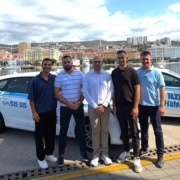
eCabs Technologies has announced that Taxi Fiume, a leading Croatian taxi operator, has officially begun a phased migration to its ride-hailing platform, as the Maltese tech company continues to roll out its technology across regulated international markets.

Founded in 2010 as a premium, tech-enabled taxi service in Malta, eCabs Technologies has since evolved into a global software company, pairing its ride-hailing platform with operational and marketing expertise to help international taxi operators compete in cities worldwide.

A €23 million investment cycle has funded that evolution, giving eCab Technologies the scale and tooling to power platforms in regulated and highly competitive markets.

Speaking from Croatia on Thursday, eCabs Technologies CEO Matthew Bezzina said this partnership marks another important milestone in the Maltese tech company’s international expansion.

“Taxi Fiume’s partnership with eCabs Technologies is a clear signal of intent from their leadership team, indicating a decisive move towards a modern, data-driven operation that can evolve quickly as the market changes,” Bezzina said.

“In every city we have worked in, once an operator experiences what a high-performance platform enables, expectations rise fast: product, speed, and continuous improvement become the standard.

Taxi Fiume is positioning itself to raise the bar for Rijeka and for the rest of Croatia and we’re excited to be along for the ride.”

The first phase focuses on the dispatch system and operational continuity, ensuring current customers and drivers experience no disruption.

Once that foundation is in place, the rider and driver apps will be introduced, followed by a broader push on customer acquisition and driver growth. The capital city Zagreb is planned as the next expansion market.

The collaboration comes at a pivotal moment for Croatia, where global platforms are now present across major cities and tourist destinations, and where local operators are increasingly investing in technology to remain competitive while maintaining their local brands.

Dean Kovačević, CEO of Taxi Fiume, said the company’s move to eCabs Technologies is designed to strengthen reliability, reduce cancellations, and build a scalable operational foundation ahead of increased competition.

“Rijeka is at an inflection point. We want Taxi Fiume to lead that change, rather than react to it. Migrating fully to eCabs Technologies gives us the technology stack and data capabilities to improve service quality, move faster, and keep raising standards for both customers and drivers. This is an investment in long-term leadership in the Croatian market,” he said.

The phased approach, Kovačević added, is a deliberate choice. “We are taking a phased migration to minimise operational risk. Our priority is continuity for our existing customers and drivers. Once that foundation is solid, the technology gives us room to grow digitally while keeping our brand, our drivers and our local identity intact.”

Founded in Malta, eCabs Technologies is a rapidly expanding ride-hailing SaaS platform empowering taxi dispatch centres and ride-hailing  operators to launch, transform, and scale in regulated markets worldwide.

What started in 2010 as Malta’s leading premium ride-hailing brand has since evolved into a globally focused technology company, powering operations across Malta, Romania, Germany, Sweden, Greece, Bulgaria, the Netherlands, Croatia and Australia, with further launches expected in the coming weeks and months.

Built to solve one of the most urgent challenges in modern mobility, eCabs Technologies gives local and legacy operators the tools to compete, and win, against global platforms

At a time when traditional operators are being squeezed out or absorbed by global platforms, eCabs Technologies enables them to retain autonomy, grow sustainably, and claim their share of a European ride-hailing market expanding by ~5% annually.

Trusted by operators across Europe and beyond, eCabs Technologies offers rider and driver apps, dispatch and call centre systems, fleet management, payments, pricing, reporting and analytics, as well as APIs and integrations, enabling any operator to compete, grow, and remain sustainable in a fast-evolving market.

Full Article: https://www.maltatoday.com.mt/business/business_news/143875/ecabs_technologies_expands_into_croatia_as_taxi_fiume_migrates_to_its_platform


 

Its time to cap ride hailing subsidies

Competition Shouldn’t Be Bought

Why competition regulators should cap rider discounts and driver incentives in the ridehailing industry.

Ride-hailing has transformed urban mobility. Millions of people now enjoy faster, more convenient transport at the tap of a button. But beneath the innovation lies a growing structural problem that regulators across the world have yet to fully address.

Most governments regulate the ride-hailing and taxi through four distinct pillars.

  • Transport regulation governs licensing, safety standards and operating requirements.
  • Employment regulation determines whether drivers are employees or independent contractors.
  • Fiscal regulation ensures the correct taxes are paid and limits opportunities for tax avoidance. The EU’s ViDA reform is a good example of policymakers recognising that platforms should no longer benefit from fiscal loopholes unavailable to local operators.
  • Finally comes competition law, whose purpose is to ensure markets remain fair and competitive.

The problem is that these four pillars rarely work together.

Transport authorities focus on vehicles and licences.
Tax authorities focus on VAT.
Employment authorities focus on workers’ rights.
Competition authorities focus on mergers and abuse of dominance.

Very few regulators ask a much simpler question:

Can a market ever be genuinely competitive when one company can spend virtually unlimited amounts of money to buy market share?

Governments are already intervening. They just haven’t gone far enough.

Across Europe, regulators have increasingly recognised that unrestricted price competition can destabilise local transport markets.

In Bulgaria, municipalities operate within a legal framework that allows them to set both minimum and maximum taxi fares. Sofia recently updated these fare bands for 2026, reinforcing the principle that prices should remain within a sustainable corridor that protects both passengers and operators.

Germany has adopted similar measures. Many cities have introduced minimum fares for private hire vehicles in an effort to prevent destructive price dumping and preserve sustainable competition.

These initiatives all share the same objective: preventing markets from collapsing under unsustainably low prices.

But they all focus on the fare.

Very few address what actually makes those fares artificially low in the first place.

The two financial weapons competition regulators ignore

Every ride-hailing platform competes using two powerful financial tools.

The first is Demand Spend.

  • Passenger discounts.
  • Promo codes.
  • Coupons.
  • Referral credits.
  • Below-cost pricing.

The second is Supply Spend.

  • Driver guarantees.
  • Quest bonuses.
  • Hourly incentives.
  • Sign-up rewards.
  • Referral bonuses.
  • Advertising programmes that reward drivers and fleets for turning their vehicles into moving billboards.

Together, these two mechanisms allow platforms to simultaneously reduce prices for passengers while increasing earnings for drivers.

Consumers are delighted because rides become cheaper.
Drivers are happy because earnings temporarily increase.
Politicians welcome lower prices and growing platform adoption.

Everyone appears to win.

At least in the short term.

The race to the bottom

The reality is very different.

When prices are artificially subsidised and driver hours are effectively purchased through incentives, competition stops being about technology, service quality, innovation or operational efficiency.

It becomes a contest of financial endurance.

Global platforms backed by billions in venture capital can absorb losses for years. Local operators cannot.

No matter how innovative they are.
No matter how efficient they become.
No matter how well they serve and know their cities.

Eventually the outcome becomes inevitable.

Local competitors disappear.
Market concentration increases.
Consumers become dependent on fewer global platforms.

Once meaningful competition has been eliminated, subsidies disappear and prices rise.

This isn’t competition.

It’s financial warfare.

A better solution

Rather than introducing increasingly complex fare regulations, competition authorities should regulate the financial mechanisms used to acquire market share.

The solution is surprisingly simple.

Set maximum permissible levels of Demand Spend and Supply Spend, taking into account the size and maturity of each local market.

This is not about banning promotions or incentives.

Every new platform, whether global or local, needs to invest in attracting riders and drivers. Building liquidity is essential in any two-sided marketplace.

For example, a new operator entering a city could be allowed to invest up to a regulator-defined amount on Demand Spend and Supply Spend during its first 12 to 24 months. That would give it sufficient room to build a viable marketplace, acquire customers and onboard drivers.

The key is that every operator competes under the same rules. Whether backed by billions in venture capital or locally owned, no platform should be allowed to spend unlimited amounts buying market share.

After the launch period, or once a platform reaches a defined level of market maturity or market share, those spending limits could gradually reduce or be capped.

The objective isn’t to eliminate incentives.

It’s to prevent unlimited incentives.

Supply Spend should be defined broadly. It includes not only cash bonuses and guaranteed earnings, but also commission rebates, referral rewards and advertising programmes that financially reward drivers and fleets for displaying platform branding on their vehicles.

In Malta, for example, Bolt has built extraordinary brand visibility by offering participating drivers and fleet operators commission discounts in exchange for displaying Bolt branding on their cars. Thousands of vehicles have effectively become moving billboards, reinforcing Bolt’s estimated 70% market share while rewarding drivers financially. These programmes are simply another form of Supply Spend and should be treated as such.

The obvious question is: how would this be enforced?

The answer is straightforward.

Every major ride-hailing platform already knows, in real time, exactly how much it spends on Demand Spend and Supply Spend. Every rider discount, driver bonus, commission rebate and advertising incentive is already tracked through its internal systems.

Competition authorities should simply require platforms to submit these figures through a standardised API or periodic regulatory reporting, much like financial and tax reporting today.

The technology already exists.
The data already exists.
Regulators simply need access to it.

Platforms would still be free to compete.
They could still innovate.
They could still run promotions.

But they could no longer overwhelm competitors simply by deploying unlimited financial resources.

Competition would once again be driven by what truly matters: better technology, better service, greater efficiency, innovation and stronger local partnerships.

Competition should reward innovation, not financial firepower

Ride-hailing has transformed urban mobility for the better.

The next stage of its evolution should not be determined by whichever company has access to the largest investment fund.

It should be determined by who builds the best product, delivers the best service and creates the greatest value for passengers, drivers and cities.

Competition law was created to protect competitive markets.

In ride-hailing, that means recognising that unlimited subsidy spending is itself a competitive distortion.

The next frontier of ride-hailing regulation isn’t another licensing rule or another minimum fare.

It’s ensuring that competition cannot simply be bought.

Article written by:
Matthew Bezzina, CEO & Founder

Bulgaria’s leading taxi operator migrates to eCabs Technologies’ platform

eCabs Technologies on Tuesday announced that Volt Premium Taxi, Bulgaria’s leading taxi operator, has officially completed a full migration to its ridehailing platform.

The move sees Volt Premium Taxi transition from the UK-based Sherlock platform to eCabs Technologies, as it doubles down on a more data-driven, technology-led approach to growth, service reliability, and continuous improvement.

For eCabs Technologies, the partnership with Volt Premium Taxi marks another milestone in its European expansion, as the company continues to power regulated-market operators seeking to modernise ahead of rapid competitive change.

The collaboration comes at a pivotal moment for Bulgaria, currently the only EU country without global ridehailing platforms, with market entry expected this year. As local operators prepare for increased pressure on quality, speed, and pricing, Volt Premium Taxi’s full migration to the eCabs Technologies tech stack signals a proactive strategy: invest early in scalable technology, strengthen operational performance, and retain local ownership of customer relationships.

Commenting on the migration, eCabs Technologies CEO Matthew Bezzina said the shift reflects a broader change happening across Europe, where forward-looking operators are choosing platform capability and agility as non-negotiables.

“This is a clear signal of intent from Volt Premium Taxi’s leadership team, indicating a decisive move towards a modern, data-driven operation that can evolve quickly as the market changes,” Bezzina said.

“In every city we have worked in, once an operator experiences what a high-performance platform enables, expectations rise fast: product, speed, and continuous improvement become the standard. Volt Premium Taxi is positioning itself to raise the bar for Sofia and we’re excited to be along for the ride.”

Oggy Popov, Co-founder and CEO of Volt Premium Taxi, said the company’s move to eCabs Technologies is designed to strengthen reliability, reduce cancellations, and build a scalable operational foundation ahead of increased competition.

“Sofia is at an inflection point. We want Volt Premium Taxi to lead that change, rather than react to it. Migrating fully to eCabs Technologies gives us the technology stack and data capabilities to improve service quality, move faster, and keep raising standards for both customers and drivers. This is an investment in long-term leadership in the Bulgarian market,” he said.

Over the coming weeks, Volt Premium Taxi will continue its rollout with a planned launch window and a full operational ramp-up following the complete migration of drivers and customers, supported by eCabs Technologies’ implementation and operational expertise.

The Modern Mobility Growth Stack

A practical package for local operators who need smarter promotions without burning margin. 

What this is: A single, integrated stack that lets you run targeted promotions, trigger campaigns based on rider behaviour, and (optionally) co-fund discounts with partners — all from your existing eCabs admin workflow. 

Who it’s for: Operators losing market share and margin because campaigns are manual, generic, and constrained by budget. 


The Problem We See Repeatedly 

  • Static coupon tools → everyone gets the same discount, regardless of value or behaviour. 
  • Manual campaigns → marketing needs developers or ops to launch and adjust. 
  • No segmentation → you can’t target reactivation, new users, or high-value riders properly. 
  • No promo budget → you can’t keep up when multinationals increase discount pressure.


The eCabs Tech Answer: 3 Modules, One Outcome 

Deploy a growth engine that increases campaign frequency and effectiveness while protecting margins.


Stack Overview 

Module 1 — Promotions Engine (Talon.One) 

What it does (plain terms): Create promo codes and automatic promotions with full eligibility rules (zones, ride types, payment methods, caps). 

Business impact: Targeted discounts, controlled exposure, less leakage. 


Module 2 — Customer Engagement Platform (MoEngage) 

What it does (plain terms): Trigger journeys across Push/SMS/Email/WhatsApp using behaviour (inactive riders, aborted signup, churn risk). 

Business impact: Higher activation & retention without blanket discounting. 


Module 3 — Partner Promotion Suite (In-App Sponsorship + Banner Logic) 

What it does (plain terms): Tie sponsor branding to campaigns so partners can co-fund discounts in exchange for premium home-screen placement. 

Business impact: Run more campaigns with less cash burn; unlock partner-funded growth. 


What You Can Launch (Examples) 

  • New user activation: Automatic “first 2 rides” discount only for new riders, capped per ride.
  • Reactivation: If a rider is inactive for 14 days, trigger a targeted incentive + a push notification journey. 
  • Payment steering: Discounts valid only on Card to reduce cash handling and improve collections. 
  • Geo/event promos: Airport or event geofence discounts during defined windows. Driver supply: Bonuses for drivers completing X rides with acceptance/completion thresholds. 
  • Customer care credits: Issue compensation vouchers linked to support tickets. 


How It Works (Simple Architecture) 

This stack plugs into the booking flow so promotions validate in real time, while engagement journeys trigger based on behaviour. 


Steps 

  1. Rider/Driver behaviour happens 

Signup, app-open, booking attempt, cancellation, ride completed, inactivity, etc. 

  1. Engagement journeys trigger 

MoEngage places users into audiences and triggers journeys (push/SMS/email/WhatsApp).

  1. Promotions validate in booking 

Talon.One evaluates rules and applies the correct discount (with caps/limits). 

  1. Partner branding (optional) 

Partner Promotion Suite applies sponsor theme on the home screen when that campaign is active. 

  1. Controls & safeguards 

Campaign priority, usage limits, caps, and anti-stacking rules reduce leakage and surprises. 


Partner Promotion Suite (What’s New) 

  • Three-layer banner logic: Global Default → Campaign Fallback → Campaign Theme Override. 
  • Campaign ID mapping: Sponsor branding (logo/colors) is tied to specific campaign IDs. 
  • Clean UX: Home screen only; no disruption during a ride; supports light/dark mode. 
  • Self-serve: Marketing teams configure banners/themes in Admin without developer work.


What You Get in a Typical Rollout 

Week 1: Confirm objectives, define 3–5 launch campaigns, set guardrails (caps, priority, payment rules). 

Week 2: Configure Talon.One campaigns + MoEngage audiences/journeys; validate end-to end in staging. 

Week 3: Launch first campaigns; monitor redemption, leakage, and rider behaviour. 

Week 4: Add Partner Promotion Suite themes; prepare 1–2 partner sponsorship templates (bank/telco/retail).

Thomas Smith joins Fastdrop to create next-generation middle- and last-mile operator

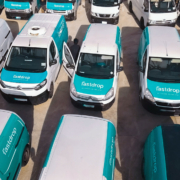
The Malta Competition and Consumer Authority has approved a strategic investment by Thomas Smith, Malta’s most established logistics provider, into Fastdrop, the island’s leading 24/7 delivery specialist. This landmark transaction marks a major step in Fastdrop’s evolution, positioning the company as the leading middle- and last-mile delivery operator across all sectors in Malta.

Through this investment, logistics specialists Thomas Smith joins mobility leaders eCabs, strengthening Fastdrop’s operational depth, scale, and reach. The venture now combines Thomas Smith’s 177-year legacy in logistics, freight, and regulatory expertise with Fastdrop’s technology-driven last-mile delivery model and strong consumer brand to create a uniquely integrated logistics platform tailored to modern business needs.

“Thomas Smith’s investment is a defining moment for Fastdrop, long recognised for its innovation, service speed and convenience in last-mile delivery,” said Greta Borg, Managing Director at Fastdrop. “The strengthened Fastdrop represents a much broader evolution, together with Thomas Smith, as it allows us to significantly accelerate our growth beyond last-mile delivery and firmly establish ourselves as the partner of choice for middle- and last-mile logistics across retail, e-commerce, FMCG, healthcare, and industrial sectors. This is about scale, reliability, and leadership.”

Gianluca Lubrano, Thomas Smith Head of Commercial, added “We bring deep-rooted logistics and regulatory know-how, while Fastdrop brings agility, innovation, and a strong consumer brand. Together, we can address the full spectrum of logistics needs, from international freight to doorstep delivery, and set new standards for the market”.

“Our investment in Fastdrop reflects a shared ambition to lead the next phase of logistics in Malta. By combining our operational backbone with Fastdrop’s innovation and delivery expertise, we are creating a market-leading platform that can serve businesses of all sizes with consistency, transparency, and speed,” he added.

The strengthened Fastdrop platform uniquely positions the company as Malta’s only operator focused on delivering a seamless middle- and last-mile solution at scale, supporting the country’s growing digital economy and evolving supply-chain demands.

With Thomas Smith’s backing, Fastdrop is set to define new standards for delivery performance, sector coverage, and operational excellence in the Maltese logistics market.