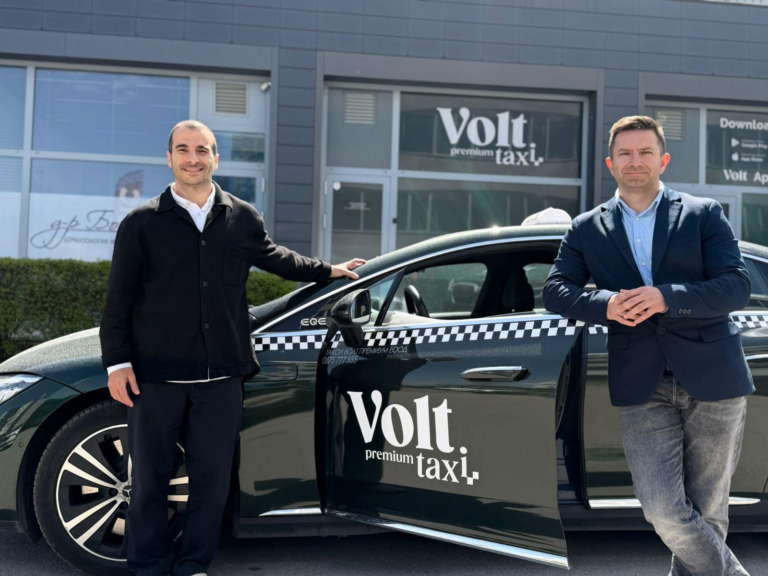
The Driver App powers your fleet: from accepting rides to tracking earnings and hitting bonuses. Built to boost performance, build loyalty, and cut churn, it’s the essential tool for a smooth, high-performing operation.


Why competition regulators should cap rider discounts and driver incentives in the ridehailing industry.
Ride-hailing has transformed urban mobility. Millions of people now enjoy faster, more convenient transport at the tap of a button. But beneath the innovation lies a growing structural problem that regulators across the world have yet to fully address.
Most governments regulate the ride-hailing and taxi through four distinct pillars.
The problem is that these four pillars rarely work together.
Transport authorities focus on vehicles and licences.
Tax authorities focus on VAT.
Employment authorities focus on workers’ rights.
Competition authorities focus on mergers and abuse of dominance.
Very few regulators ask a much simpler question:
Can a market ever be genuinely competitive when one company can spend virtually unlimited amounts of money to buy market share?
Across Europe, regulators have increasingly recognised that unrestricted price competition can destabilise local transport markets.
In Bulgaria, municipalities operate within a legal framework that allows them to set both minimum and maximum taxi fares. Sofia recently updated these fare bands for 2026, reinforcing the principle that prices should remain within a sustainable corridor that protects both passengers and operators.
Germany has adopted similar measures. Many cities have introduced minimum fares for private hire vehicles in an effort to prevent destructive price dumping and preserve sustainable competition.
These initiatives all share the same objective: preventing markets from collapsing under unsustainably low prices.
But they all focus on the fare.
Very few address what actually makes those fares artificially low in the first place.
Every ride-hailing platform competes using two powerful financial tools.
The first is Demand Spend.
The second is Supply Spend.
Together, these two mechanisms allow platforms to simultaneously reduce prices for passengers while increasing earnings for drivers.
Consumers are delighted because rides become cheaper.
Drivers are happy because earnings temporarily increase.
Politicians welcome lower prices and growing platform adoption.
Everyone appears to win.
At least in the short term.
The reality is very different.
When prices are artificially subsidised and driver hours are effectively purchased through incentives, competition stops being about technology, service quality, innovation or operational efficiency.
It becomes a contest of financial endurance.
Global platforms backed by billions in venture capital can absorb losses for years. Local operators cannot.
No matter how innovative they are.
No matter how efficient they become.
No matter how well they serve and know their cities.
Eventually the outcome becomes inevitable.
Local competitors disappear.
Market concentration increases.
Consumers become dependent on fewer global platforms.
Once meaningful competition has been eliminated, subsidies disappear and prices rise.
This isn’t competition.
It’s financial warfare.
Rather than introducing increasingly complex fare regulations, competition authorities should regulate the financial mechanisms used to acquire market share.
The solution is surprisingly simple.
Set maximum permissible levels of Demand Spend and Supply Spend, taking into account the size and maturity of each local market.
This is not about banning promotions or incentives.
Every new platform, whether global or local, needs to invest in attracting riders and drivers. Building liquidity is essential in any two-sided marketplace.
For example, a new operator entering a city could be allowed to invest up to a regulator-defined amount on Demand Spend and Supply Spend during its first 12 to 24 months. That would give it sufficient room to build a viable marketplace, acquire customers and onboard drivers.
The key is that every operator competes under the same rules. Whether backed by billions in venture capital or locally owned, no platform should be allowed to spend unlimited amounts buying market share.
After the launch period, or once a platform reaches a defined level of market maturity or market share, those spending limits could gradually reduce or be capped.
The objective isn’t to eliminate incentives.
It’s to prevent unlimited incentives.
Supply Spend should be defined broadly. It includes not only cash bonuses and guaranteed earnings, but also commission rebates, referral rewards and advertising programmes that financially reward drivers and fleets for displaying platform branding on their vehicles.
In Malta, for example, Bolt has built extraordinary brand visibility by offering participating drivers and fleet operators commission discounts in exchange for displaying Bolt branding on their cars. Thousands of vehicles have effectively become moving billboards, reinforcing Bolt’s estimated 70% market share while rewarding drivers financially. These programmes are simply another form of Supply Spend and should be treated as such.
The obvious question is: how would this be enforced?
The answer is straightforward.
Every major ride-hailing platform already knows, in real time, exactly how much it spends on Demand Spend and Supply Spend. Every rider discount, driver bonus, commission rebate and advertising incentive is already tracked through its internal systems.
Competition authorities should simply require platforms to submit these figures through a standardised API or periodic regulatory reporting, much like financial and tax reporting today.
The technology already exists.
The data already exists.
Regulators simply need access to it.
Platforms would still be free to compete.
They could still innovate.
They could still run promotions.
But they could no longer overwhelm competitors simply by deploying unlimited financial resources.
Competition would once again be driven by what truly matters: better technology, better service, greater efficiency, innovation and stronger local partnerships.
Ride-hailing has transformed urban mobility for the better.
The next stage of its evolution should not be determined by whichever company has access to the largest investment fund.
It should be determined by who builds the best product, delivers the best service and creates the greatest value for passengers, drivers and cities.
Competition law was created to protect competitive markets.
In ride-hailing, that means recognising that unlimited subsidy spending is itself a competitive distortion.
The next frontier of ride-hailing regulation isn’t another licensing rule or another minimum fare.
It’s ensuring that competition cannot simply be bought.
Article written by:
Matthew Bezzina, CEO & Founder

 eCabs Technologies expands into Croatia as Taxi Fiume migrates to its platf...